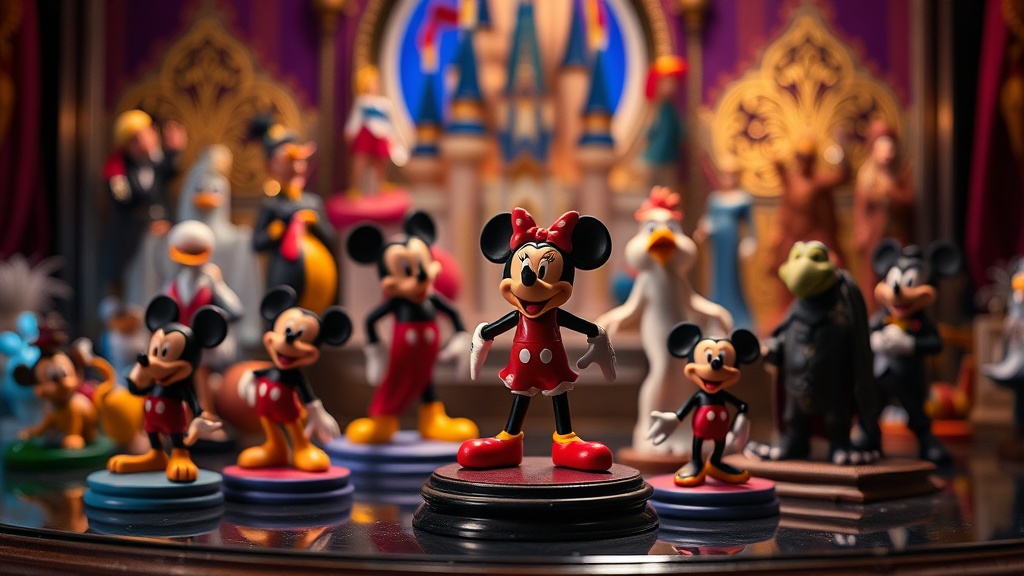
How to Display and Protect Your Disney Collectible Figurines

This guide covers practical methods for displaying and safeguarding Disney collectible figurines—from cabinet selection and lighting choices to dust prevention and damage control. Whether you've just acquired your first Lion King Jim Shore piece or you're managing a collection spanning hundreds of figures, proper display techniques protect both the visual appeal and long-term value of these collectibles.
What's the Best Way to Protect Disney Figurines from Dust and Sunlight?
Direct sunlight and dust accumulation represent the two most common threats to Disney collectibles. Ultraviolet radiation fades paint and degrades materials over time—sometimes within months of exposure. Dust, meanwhile, settles into crevices and can chemically interact with certain finishes if left unattended.
Here's the thing: protection doesn't require a museum-grade setup. For most collectors, strategic placement solves half the problem immediately. Position display cabinets away from windows, or install 3M UV-blocking window film if natural light fills the room. South-facing windows in Kelowna—and anywhere with intense summer sun—pose particular risks.
Enclosed cabinets with glass doors provide superior dust protection compared to open shelving. The IKEA DETOLF glass-door cabinet remains a popular choice among collectors for its affordability and visibility, though it requires modification (adding weatherstripping or acrylic backing) to achieve true dust sealing. For premium protection, the Restoration Hardware Pharmacy Cabinet offers sealed construction—but at significantly higher cost.
Dust prevention extends to the figures themselves. Consider these approaches:
- Microfiber dusting: Weekly light passes with a clean microfiber cloth prevent buildup without disturbing delicate paint applications
- Compressed air: Useful for reaching intricate details on Jim Shore or Grand Jester pieces—use short bursts from 6+ inches away
- Display case lining: Acid-free felt or foam creates a barrier that catches dust before it reaches figure bases
The catch? Some collectors prefer open displays for accessibility. In these cases, accept that more frequent cleaning becomes necessary—perhaps every 3-4 days rather than weekly.
How Do You Choose the Right Display Cabinet for Disney Collectibles?
Selection depends on collection size, available space, and whether figures require individual protection or group display. There's no universal solution—what works for a dozen Precious Moments Disney figurines differs entirely from housing 200+ Funko Pops or action figures.
That said, several specifications matter across all scenarios:
| Cabinet Type | Best For | Price Range (CAD) | Dust Protection |
|---|---|---|---|
| IKEA DETOLF | Mid-size collections, visibility priority | $80-100 | Moderate (glass doors help) |
| SAUDER Barrister Lane | Book-style displays, mixed collectibles | $200-350 | Good (enclosed compartments) |
| Custom acrylic cases | High-value individual pieces | $50-200 per case | Excellent |
| Modular wire shelving + covers | Large collections, budget-conscious | $100-300 | Poor (requires custom covers) |
Shelving material deserves attention. Glass shelves provide clean sightlines but limit weight capacity—important when displaying heavier resin pieces like those from Enesco's Grand Jester Studios. Wood shelves handle weight better but may require reinforcement for truly heavy items (some limited-edition figures exceed 10 pounds).
Lighting within cabinets requires careful planning. LED strip lights (warm white, 3000K) minimize heat output while enhancing colors. Avoid halogen or incandescent options—heat accumulation damages PVC and paint over time. Install lights along the top interior edge, angling downward to reduce glare on glass surfaces.
Spacing and Arrangement Considerations
Crowding figures creates contact points where paint rubs off and pieces chip. Maintain at least one inch between items—more for figures with protruding elements (ears, wings, accessories). Rotating displays seasonally not only refreshes the visual presentation but also ensures even light exposure across the collection.
For shelf layout, consider sight lines. Place taller pieces toward the back, shorter ones forward—but don't rigidly follow this rule. Some collectors create deliberate "scenes" mixing scales intentionally (a large Beast figure looming over smaller Beauty characters, for instance). These vignettes tell stories. Just ensure no figure touches another.
What Steps Prevent Physical Damage to Disney Figurines?
Physical damage—drops, chips, paint transfer—destroys value instantly and permanently. Prevention strategies range from handling protocols to environmental controls that reduce accident risks.
Handling technique matters enormously. Always lift figurines by the sturdiest structural point, never by delicate appendages. For Jim Shore Disney Traditions pieces (known for their intricate carved-wood aesthetic), grip the base or main body section—never the extended arms, ears, or decorative elements. Wash hands before handling; skin oils degrade certain finishes and attract dust.
Earthquake and stability protection deserve attention regardless of location. Museum putty (such as QuakeHOLD! Putty) secures bases to shelves without permanent adhesion—removable when needed. For high-value pieces, consider acrylic display risers that physically surround the figure base. These prevent tipping while maintaining visibility.
Worth noting: humidity fluctuations cause more damage than most collectors realize. Ideal relative humidity ranges between 40-55%. Below 30%, certain resins become brittle; above 65%, mold risk increases and metal components (pins, internal supports) may corrode. Kelowna's semi-arid climate typically stays within acceptable ranges, but indoor heating during winter drops humidity dramatically—consider a small humidifier if figures display in heated rooms.
Temperature stability rivals humidity in importance. Avoid display locations near heating vents, radiators, or exterior walls with significant temperature swings. The goal isn't necessarily a specific temperature (though 65-75°F works well)—it's consistency. Rapid expansion and contraction from temperature cycling stresses materials at glue points and paint boundaries.
Cleaning Without Damage
When dust accumulates despite preventive measures, cleaning requires care. Never submerge figurines—internal cavities trap moisture leading to mold. Instead:
- Remove the figure from display if possible
- Use a soft, dry makeup brush (unused) for loose dust
- For stubborn spots, barely dampen a microfiber cloth with distilled water—tap water minerals leave residue
- Pat, don't rub, painted surfaces
- Allow complete air drying before returning to display
Some finishes—particularly metallic paints common on limited-edition pieces—scratch easily. Test any cleaning approach on an inconspicuous area first. When in doubt, consult manufacturer guidelines; Enesco, for instance, provides specific care instructions for their various Disney product lines.
How Should You Store Disney Collectibles That Aren't on Display?
Rotation keeps collecting fresh, but improper storage damages figures as surely as careless display. The principles mirror display protection—light control, dust exclusion, stable environment—but with additional considerations for packing materials.
Original packaging provides ideal protection if available. Keep boxes flat, not stacked heavily, in climate-controlled spaces. For figures without original packaging, archival-quality storage boxes (Gaylord and Lineco produce suitable options) prevent acid migration that yellows whites and degrades plastics over decades.
Wrapping materials matter enormously. Never use newspaper—ink transfers permanently. Bubble wrap直接接触 can imprint texture onto soft paints over time; instead, wrap figures first in acid-free tissue, then add bubble wrap for cushioning. For long-term storage (years rather than months), silica gel packets control moisture—but don't let them contact figures directly.
"The figures you store today become the treasures you'll rediscover tomorrow. Treat storage with the same respect as display." — Common sentiment among veteran collectors at Kelowna swap meets
Documentation accompanies good storage. Photograph each piece before packing, noting any existing condition issues. This practice proves invaluable for insurance purposes and prevents arguments about whether damage occurred during storage or handling.
Accessibility presents the final storage consideration. Store similar items together—grouping by series, manufacturer, or theme—so retrieval doesn't require disturbing unrelated pieces. Label boxes clearly on multiple sides. The goal: any specific figure locates within minutes, not hours of searching and unboxing.
Display and protection strategies evolve with collection growth. Start with fundamentals—dust control, stable environment, careful handling—then refine based on specific figure types and personal display preferences. The Disney collectibles market rewards preservation; figures maintained in excellent condition retain value and enjoyment potential for decades.