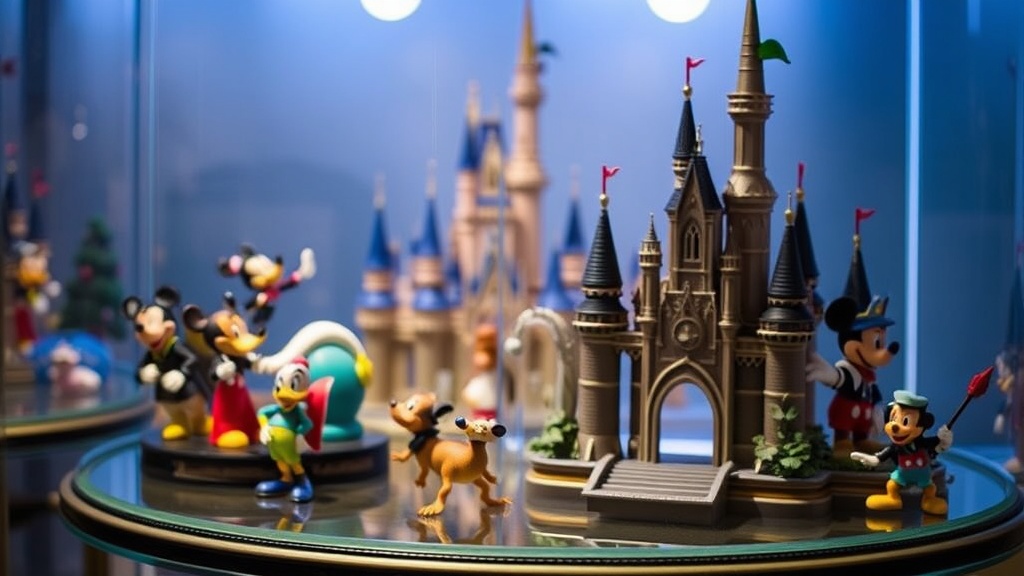
Protect Your Disney Collectibles: key Display Tips for Collectors

Quick Tip
Always display Disney collectibles away from direct sunlight and use UV-protective acrylic cases to prevent fading and yellowing over time.
This post covers practical display strategies that keep Disney collectibles pristine while showing them off. Light damage, dust accumulation, and humidity—these silent threats can ruin valuable pieces faster than you'd think. The right setup protects investments and keeps collections looking museum-quality for years.
How Do You Protect Figures from Sunlight Damage?
Direct sunlight fades paint and yellows plastics irreversibly. UV rays break down vinyl and PVC over time, turning vibrant characters into washed-out shadows of themselves. The solution isn't just "keep them away from windows"—it's about controlling light exposure intelligently.
North-facing rooms (in the Northern Hemisphere) provide the most consistent, indirect natural light. For south-facing displays, UV-blocking window film—3M's Prestige Series filters 99% of harmful rays—works wonders. Acrylic display cases with UV-resistant properties (like those from BCW Supplies) add another defense layer.
LED strip lighting has revolutionized collectible display. Unlike halogen or incandescent bulbs, quality LEDs emit virtually no UV radiation and produce minimal heat. The Philips Hue Play bars let you adjust color temperature—warm white (2700K) shows off classic figures beautifully without the bleaching effect of daylight (5600K+).
What's the Best Way to Display Figures Without Damaging Them?
It depends on the figure type, material, and value. Here's the thing—floating shelves work for light vinyl figures, but heavier resin pieces need anchored wall mounts or enclosed cabinets. Gravity, unfortunately, doesn't discriminate.
| Figure Type | Best Display Method | Why It Works |
|---|---|---|
| Funko Pops / Vinyl | Floating shelves with lip | Lightweight, protects from falls |
| Resin Statues (1/6 scale+) | Glass-front cabinets | Weight support, dust protection |
| FigPins / Small Metal | Cork or fabric boards | Prevents scratching, easy rearranging |
| Plush / Soft Toys | Open shelving, regular rotation | Air circulation prevents mustiness |
The catch? Many collectors overlook off-gassing. New figures—especially PVC imports from manufacturers like Good Smile Company—release plasticizers for months. Enclosed cases trap these chemicals, creating a foggy film on surfaces. Leave figures in open air for 2-3 weeks before sealing them in display cases.
How Do You Control Humidity for Collectibles?
Maintain 40-50% relative humidity. Too dry and plastics become brittle; too humid and mold grows, metal tarnishes, and cardboard packaging warps. Simple hygrometers ($10-15 on Amazon) monitor conditions—place one at display level, not floor level, for accurate readings.
Silica gel packets help, but they're temporary. For serious collections, the Eva-Dry E-333 renewable mini-dehumidifier absorbs moisture for 4-6 weeks, then recharges in a few hours. Worth noting—placement matters. Keep dehumidifiers below displays (humidity rises) and avoid placing figures directly above heating vents or radiators.
Kelowna's semi-arid climate actually benefits local collectors—average humidity sits around 35-40% year-round. That said, winter heating drops indoor moisture dangerously low. A small ultrasonic humidifier (the Levoit Classic 200) balances things out during those dry Okanagan winters.
Finally, dust isn't just unsightly—it's abrasive. Feather dusters push particles around; microfiber cloths trap them. For intricate sculpts (think Enesco's Grand Jester Studios line), compressed air at low pressure blasts dust from crevices without touching paint. Display your collection proudly—but display it smart.