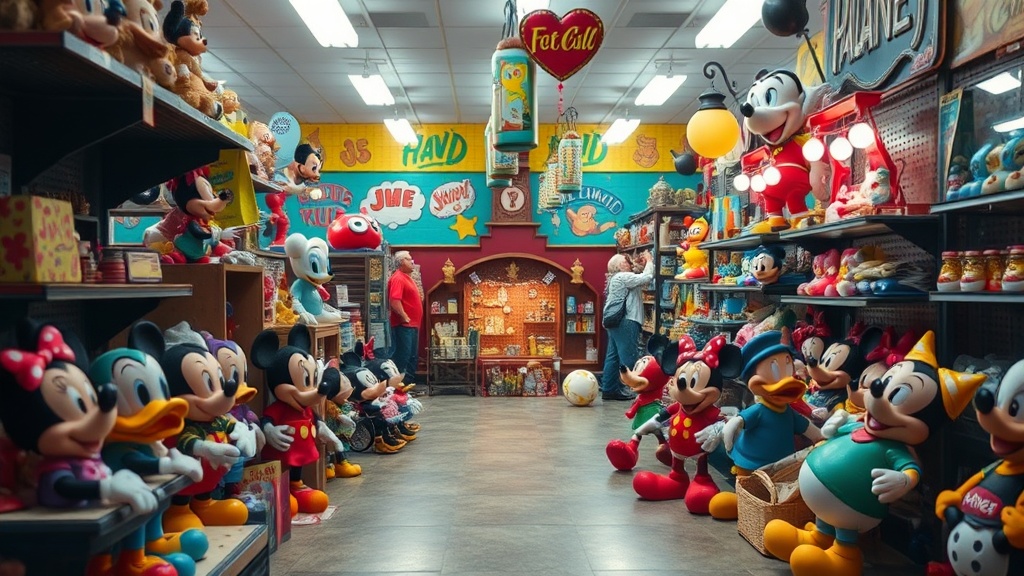
Finding Rare Disney Treasures at Thrift Stores and Garage Sales

Did you know that certain discontinued Disneyana items from the 1990s can fetch over $500 at auction simply because a single collector wants to complete a set? Finding high-value Disney collectibles at thrift stores and garage sales requires a specific eye for detail, a bit of patience, and a deep understanding of production markings. This post breaks down the exact strategies you need to spot hidden gems, verify authenticity on the fly, and negotiate prices without feeling awkward.
How Do I Spot Rare Disney Items at Thrift Stores?
You spot rare Disney items by looking past the obvious branding and focusing on specific manufacturer marks, weight, and material quality. Most casual shoppers look for the big, bright Disney logos, but the real treasure is often hidden in the fine print on the bottom of a figure or the back of a box. You aren't just looking for "Disney"; you're looking for specific production runs from companies like Mattel, Hasbro, or even high-end boutique makers.
When you're scanning a shelf at a local thrift shop, don't just look at the faces of the characters. Look at the feet. Look at the underside of the base. A high-quality Disney Store exclusive or a limited edition Disney Parks souvenir will often have a much more detailed-looking copyright stamp than a standard mass-market toy.
Keep an eye out for these specific categories:
- Vintage Kenner Era Toys: These often have a specific aesthetic and weight that modern toys lack.
- Disney Parks Souvenirs: Items sold only at the parks (like certain pins or plushies) are highly sought after.
- Limited Edition Designer Collections: These might not even say "Disney" in huge letters, but the craftsmanship screams high-end collectible.
One thing to remember: a dusty box isn't a dealbreaker. In fact, an "unopened" box—even if it's a bit battered—can significantly increase the value of a vintage item. If you find a box that looks old, check the edges for signs of moisture or heavy wear. You'll want to be sure the item inside hasn't suffered from "shelf wear" or environmental damage before you commit.
If you're worried about whether a find is a knock-off, you should practice distinguishing genuine Disney collectibles before you head out into the field. Knowing the difference between a legitimate licensed product and a bootleg is the difference between a great find and a wasted twenty dollars.
What Should I Look For to Verify Authenticity?
Verification happens by checking for official copyright marks, specific manufacturer logos, and the physical texture of the item. Most legitimate Disney products will have a very specific, crisp engraving of the copyright (©) and the year of production. If the text looks blurry, shallow, or is missing entirely, you're likely looking at a counterfeit or a generic toy.
I always carry a small-batch magnifying glass or use the macro lens on my phone to check these details. It's a small tool, but it saves you from buying a "fake" that looks good at a distance. Here is a quick checklist for your next hunt:
- The Copyright Stamp: Look for "© Disney" followed by a year. Check if the font is clean or if it looks "melted."
- Manufacturer Marks: Look for names like Mattel, Hasbro, or even Disney itself.
- Material Feel: High-end collectibles usually have a certain weight. If a "heavy" bronze-look statue feels like light plastic, something is wrong.
- Seam Lines: Cheap toys often have visible, jagged seam lines where the plastic halves were joined.
It's also worth noting that many modern "collectibles" are actually mass-produced for big-box retailers. While they are still "official," they might not hold the same resale value as a piece from a specialized line. You'll want to check the Wikipedia entry for Disney collectibles or similar databases to see which eras or brands are currently trending in the community.
| Feature | Mass-Market Toy | High-End Collectible |
|---|---|---|
| Weight | Light, hollow feel | Substantial, weighted feel |
| Markings | Simple, often printed | Engraved, crisp, or embossed |
| Detailing | Simplified features | Intricate textures and fine lines |
| Value Potential | Low/Stable | High/Variable |
After you find a piece, don't just rush to the register. Take a moment to ensure it isn't damaged in a way that ruins its value. A cracked limb or a missing accessory can drop the price by 70% instantly. If you're unsure about how to handle a delicate find, read up on caring for your Disney toy collection to understand how to preserve the condition of your new treasure.
How Much Are Disney Collectibles Worth?
The value of a Disney collectible is determined by its rarity, its condition, and the current demand within the collector community. There is no fixed price for a "Disney toy," because one person's $5 garage sale find can be another person's $500 auction piece. You have to research the specific item to know what you're holding.
Price is often dictated by "The Three Cs": Condition, Completeness, and Character. A complete set of limited edition pins will always outprice a single, loose pin. A mint-in-box (MIB) figure will always be worth more than a loose one. And certain characters—like classic Mickey or modern favorites like Stitch—tend to have much higher market liquidity.
Here is how I approach pricing a potential find:
- Check the "Sold" listings: Don't look at what people are *asking* for an item on eBay; look at what people actually *paid*. This is the most honest way to gauge value.
- Assess the Condition: Is there paint rub? Is the box crushed? A "Near Mint" item is a different tier than a "Good" condition item.
- Identify the Niche: Is this a general Disney toy, or is it a niche piece for a specific sub-collector (like a Star Wars or Pixar specialist)?
The catch? Some items look expensive but have zero resale value. For example, a large, bulky plastic statue might look impressive, but if it's too expensive to ship, the market for it is much smaller. Always consider the logistics of the item before you decide it's a "big win."
If you find yourself accumulating many of these items, you'll eventually need to think about how to store them. I've written about displaying and protecting your figurines, which is a great next step once you've mastered the art of the thrift store hunt. A well-kept collection maintains its value, while a neglected one loses it quickly.
When you're at a garage sale, don't be afraid to ask the seller questions. "Do you know how old this is?" or "Does this have the original packaging?" can provide huge clues. Most people selling at garage sales aren't collectors—they're just clearing out old boxes. They might not even realize they're holding a piece of history. Be respectful, be polite, and keep your eyes peeled.
Steps
- 1
Researching Value Before You Go
- 2
Checking for Authenticity Marks
- 3
Inspecting Condition and Integrity
- 4
Negotiating Your Find