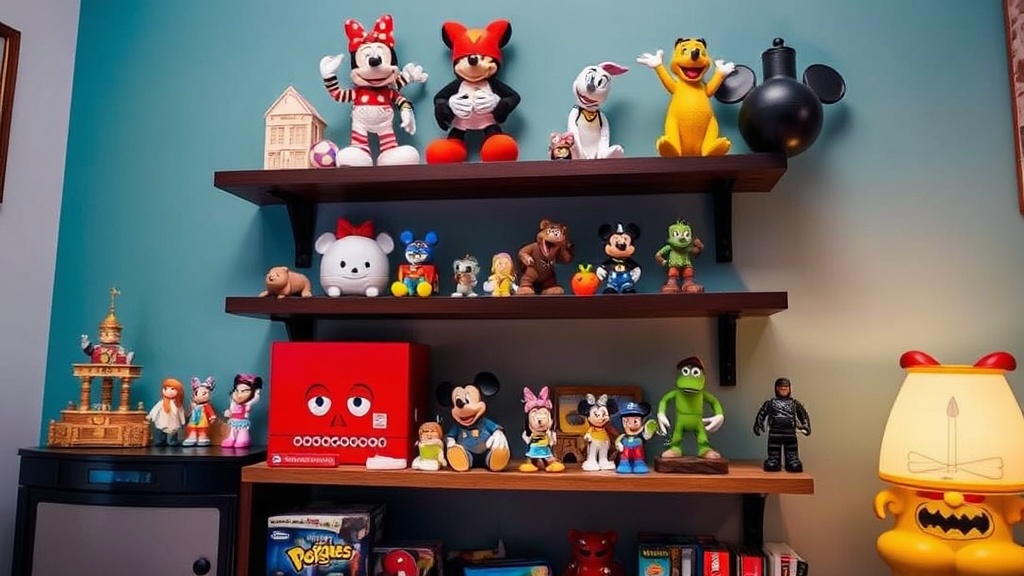
Smart Ways to Organize Your Disney Toy Shelves

Imagine walking into your hobby room and seeing a mountain of loose Disney figures, tangled with half-opened boxes and tangled cables. You want to find that one specific limited edition Pinocchio figure, but it's buried under a pile of modern Funko Pops and loose way too many accessories. Organizing a collection isn't just about making things look pretty; it's about protecting your investment and making sure you can actually find what you love without a scavenger hunt. This guide covers specific shelving strategies, lighting techniques, and display methods tailored specifically for Disney toy collectors.
How Should You Organize Disney Toy Shelves?
The best way to organize your Disney toy shelves is by grouping items by category, era, or brand to create a visual flow. Instead of a random jumble, try grouping your collection into logical sections—like a dedicated shelf for Disney Parks exclusives, another for vintage 1990s era toys, and a third for modern high-end figures like those from the Disney Store. This makes your collection feel like a curated museum rather than a cluttered storage bin.
Grouping by height is another trick. If you put a tall Hercules figure right next to a tiny Disney Tsum Tsum, the small one gets lost. You want a gradual transition in height to guide the eye. A tiered riser is a collector's best friend here. It prevents the "front row" from hiding the "back row."
Here are a few ways to categorize your displays:
- By Franchise: Grouping all Pixar items together and all Star Wars (Disney-owned) items together.
- By Scale: Keeping your 12-inch dolls separate from your 3-inch micro-figures.
- By Era: Placing your vintage 1980s Disney items in one section and contemporary releases in another.
- By Material: Separating plushies from hard plastic figures to prevent lint transfer.
It's a simple method, but it works. If you're a fan of the more delicate side of things, you'll want to keep your plushies away from the heavy, hard-plastic figures to avoid any accidental crushing or snagging.
What Are the Best Display Cases for Disney Collectibles?
The best display cases for Disney collectibles are clear, UV-protected acrylic or glass cabinets that prevent dust buildup and sunlight damage. If you own high-value items, you need more than just a shelf; you need a barrier. Sunlight is the enemy of a collector. It fades the vibrant colors on a Disney Princess doll's dress faster than you'd think.
Acrylic cases are great for individual figures, but for larger collections, a full cabinet is better. If you're looking at something like the IKEA Billy bookcase or the Kallax series, you'll want to add custom glass doors. Glass doors are a lifesaver. They keep the dust away, which means you spend less time cleaning and more time enjoying the collection. Speaking of cleaning, if you haven't looked into proper maintenance, you might want to check out my guide on dust-free magic and caring for your collection to avoid scratches.
Let's look at the pros and cons of common display types:
| Display Type | Best For | Pros | Cons |
|---|---|---|---|
| Acrylic Risers | Small Figures (Funko, Tsum Tsum) | Great visibility, cheap | Can look cluttered if too many are used |
| Glass Cabinets | High-Value/Rare Items | Protects from dust and UV | Heavy and expensive |
| Open Shelving | Large Plush or Bulky Items | Easy access, looks "lived in" | Dust magnet; requires constant cleaning |
| Shadow Boxes | Small Medallions or Pins | Space-saving, looks professional | Limited depth |
One thing to watch out for is the weight. If you're using floating shelves to display heavy Disney vinyl figures, make sure you're using high-quality anchors. You don't want your shelf—or your favorite collectible—crashing to the floor because of a weak bracket.
How Do I Prevent Damage to My Disney Toys?
Preventing damage involves controlling three main factors: light, dust, and temperature. You can protect your items by using UV-resistant glass, keeping them in a climate-controlled room, and using specialized cleaning tools. Most damage happens because of neglect, not because the toy itself is "bad."
First, let's talk about light. If your shelf is right next to a window, your Mickey Mouse figures are going to lose their luster. Even if the glass is tinted, UV rays are persistent. If you can't move the shelf, buy UV-filtering film for your windows. It's a small investment that saves a lot of heartbreak later.
Second, dust is a constant battle. Dust isn't just a nuisance; it can actually hold moisture and cause certain types of degradation in older plastics or fabrics. I've found that using a soft-bristled brush—something like a high-quality makeup brush or a dedicated camera lens brush—is way safer than using a damp cloth. A damp cloth can leave streaks or even cause water spots on certain finishes.
Third, temperature. If you're storing your collection in a basement or an attic, stop. Fluctuations in temperature cause materials to expand and contract. This is especially bad for articulated figures where the joints might become loose or even snap if the plastic becomes brittle from extreme cold. A consistent, room-temperature environment is the gold standard.
When you're out hunting for new pieces, remember that the condition of the item starts with how it's stored. If you're someone who loves the thrill of the hunt, you might be interested in my tips for finding rare Disney treasures at thrift stores. Just remember that once you bring them home, the real work of preservation begins.
If you're dealing with a very specific, high-end item, you might want to look at the official Disney website for any specific care instructions, though most collectors rely on general high-end figure preservation standards.
Don't forget about the "out of box" dilemma. If you're a collector who keeps everything in the packaging, your organization strategy changes. You're no longer just organizing toys; you're organizing boxes. Boxed collections take up way more room and require much sturdier shelving. A standard shelf might sag under the weight of fifty boxed Disney limited edition figurines. Always check the weight capacity of your furniture before you start loading it up.
If you're still feeling overwhelmed, try the "One In, One Out" rule. For every new item you add to your shelf, try to find a way to declutter or move an older item to long-term storage. It keeps the collection from becoming an unmanageable hoard. It's a way to keep your display fresh and intentional.
Organizing a collection is a marathon, not a sprint. Take your time with it. Your shelves should reflect your personality and your history as a collector. Whether you have a small corner or a dedicated room, the goal is to create a space that makes you smile every time you walk past it.