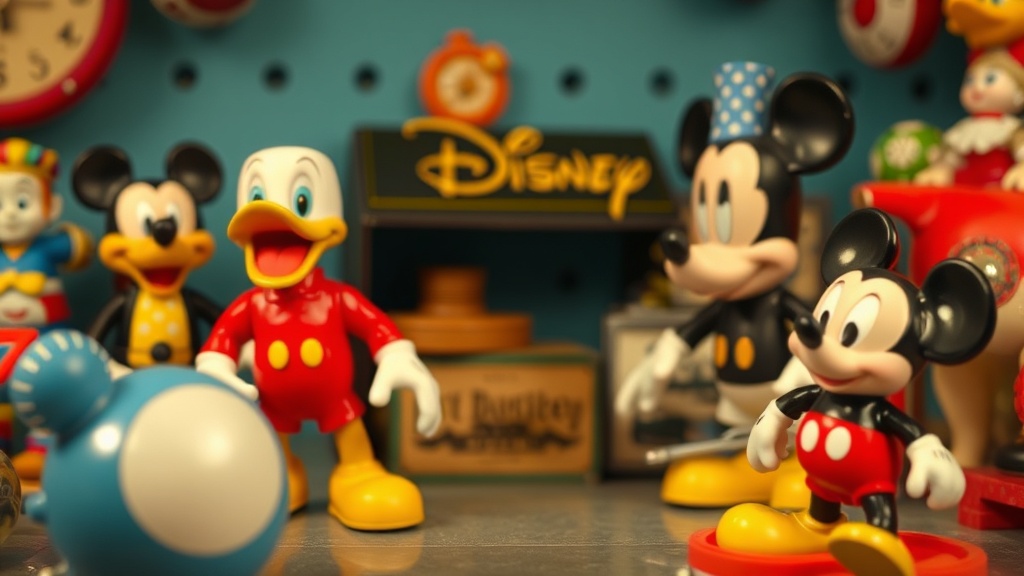
Vintage Disney Toy Eras to Watch for at Antique Malls

The Golden Age of Animation Merchandise
The 1980s Renaissance Boom
The Late 90s Transition Era
Are you tired of finding nothing but dusty, modern plastic at your local antique mall? This post breaks down the specific eras of Disney toy production that actually hold value and why certain decades are better for hunting than others. If you want to stop wasting time on low-value junk and start finding the real gems—the stuff that actually appreciates—you need to know which decades to target.
What are the most valuable eras for vintage Disney toys?
The most valuable eras for vintage Disney toy collecting are the "Golden Age" of animation (1930s–1950s) and the high-production era of the 1980s–1990s. While the early era offers rare, high-end sculptural pieces, the later era provides a massive volume of recognizable, highly collectible items like Kenner figures and Disneyana porcelain.
When you're walking through an antique mall, you aren't just looking for "old stuff." You're looking for specific production markers. For example, a 1930s rubber hose era Mickey Mouse figure is a completely different beast than a 1990s Disney Store plush. One is a museum piece; the other is a nostalgic collectible. Both have value, but you need to know what you're looking for before you even open your wallet.
The Golden Age (1930s - 1950s)
This is the heavy hitter. We're talking about the era of early celluloid, wood, and early rubber-style figures. These pieces often feel more like art than toys. If you find a genuine piece from this era, it's likely a high-value item.
Finding these at an antique mall is rare—honestly, it's like finding a needle in a haystack—but the payoff is huge. Most of these items were meant to be played with, which means "Mint in Box" (MIB) versions are almost non-existent. A well-preserved figure from this era is a holy grail for serious collectors.
The Mid-Century Boom (1960s - 1970s)
This era is a bit of a transition period. You'll see more plastic-heavy toys and the rise of promotional items. This is where the "Disneyana" market really starts to take shape. Think of the various promotional items given away at Disneyland or early souvenir items. They aren't as expensive as the 1930s pieces, but they have a massive, dedicated following.
Pro tip: Keep an eye out for vintage tin toys from this period. They have a distinct aesthetic that collectors crave. If you see a tin Mickey or Donald, grab it. Even if it's slightly dented, the charm is undeniable.
The Renaissance & Kenner Era (1980s - 1990s)
This is the sweet spot for most modern collectors. This era saw a massive explosion in toy production. Brands like Kenner and Mattel were producing high-quality figures for films like The Little Mermaid, Aladdin, and The Lion King.
The reason this era is so great for antique mall hunting is volume. There is a lot of this stuff out there. You're much more likely to find a Kenner Disney figure in a box at a local mall than you are a 1940s celluloid figure. It's much more accessible for the average collector. Just be careful with the packaging; the box is often worth as much as the toy itself. If you're worried about how to handle these delicate items, check out our guide on protecting your Disney collectibles from sun damage to keep that packaging looking crisp.
How much do vintage Disney toys cost?
Prices vary wildly based on rarity, condition, and the specific era, but a common 1990s Kenner figure might go for $15–$40, while a rare 1930s era sculptural piece can exceed several thousand dollars.
It's hard to pin down a single number because the market is so fragmented. A single, loose Mickey Mouse figure from the 1930s is a different world than a 1995 Disney Store plush. One is an investment; the other is a nostalgic collectible. You have to decide which path you're on. If you're looking for a quick win, the 90s era is your friend. If you're looking for a life-long pursuit, look toward the earlier decades.
| Era | Typical Item Type | Price Range (Estimated) | Collector Difficulty |
|---|---|---|---|
| 1930s-1950s | Rubber/Celluloid/Wood | $500 - $5,000+ | Very High |
| 1960s-1970s | Tin/Early Plastic | $50 - $300 | Medium |
| 1980s-1990s | Kenner/Disney Store | $10 - $100 | Low |
Don't get discouraged if you don't find a high-value piece on your first trip. Most people spend years just learning to identify the difference between a "toy" and a "collectible." That's part of the fun. It's the hunt that keeps us coming back.
Which Disney brands are most collectible?
The most collectible brands are those with high-quality production and strong nostalgia, such as Kenner, Mattel, and the original Disney Store line.
When you're scanning the shelves, look for names you recognize. Kenner is a big one. They had a specific way of doing things that collectors love. The 1990s Disney Store also produced some incredible high-quality plush and porcelain items that are still highly sought after.
It's also worth noting that "Disneyana" isn't just toys. It includes things like vintage pins, ceramics, and even high-end stationery. However, if you're strictly a figure collector, stick to the big names. If you see a brand you don't recognize, do a quick search on Wikipedia or a dedicated collector database to see if it's a known name in the community. It's better to know now than to realize later that you passed on a gem.
The "Hidden" Gems of the Antique Mall
Sometimes the best finds aren't even labeled as "Disney." You might find a generic vintage Mickey Mouse item that was never officially licensed but has a certain charm. These are often called "unlicensed" or "bootleg" items. While they don't have the same resale value as official Kenner products, they can be incredibly fun to collect.
However, if your goal is strictly investment, stick to the official brands. You want to see that copyright stamp. It's the difference between a piece of junk and a piece of history.
One thing to watch out for: modern "vintage-style" toys. Some companies make new toys that look old to trick people. Always check the bottom of the feet or the back of the neck for a date or a copyright. If it says "© 2022," it isn't vintage, no matter how much it looks like it's from the 50s.
When you do find something that looks promising, be sure to handle it with care. A scratched surface or a broken limb can tank the value instantly. If you're worried about how to display your new finds, you might want to look at lighting your Disney figure display to ensure they look their best once you get them home.
The most important thing is to keep an eye on the details. A small scratch might not seem like much, but in the world of high-end collecting, it's everything. Always bring a magnifying glass or a strong flashlight when you go hunting. It helps you see the small things—the copyright dates, the material textures, and the tiny imperfections—that tell the real story of the piece.