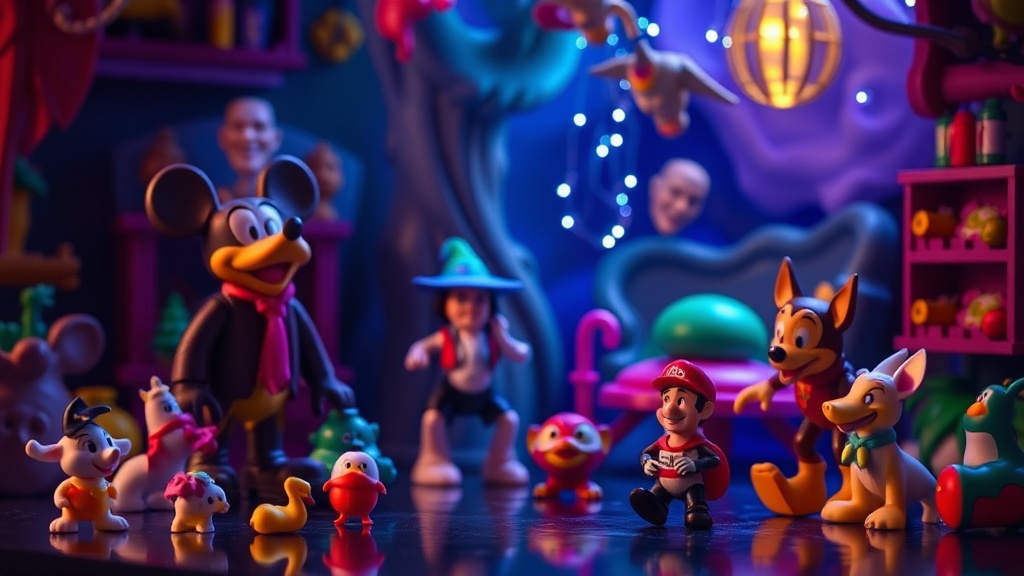
Hidden Gems of the 90s Disney Toy Era

The Renaissance Era Action Figures
Limited Edition Plush Throwbacks
Rarety of the Toy Story Launch Era
A collector finds a dusty, unbranded box at a garage sale in the suburbs. Inside, tucked under a pile of old board games, lies a pristine, unopened 1994 Hercules figure from the Hercules line. While most people were hunting for the big hits like The Lion King or Aladdin, this specific piece has become a high-demand item for niche collectors today.
The 1990s were a golden age for Disney toy production, but the era wasn't just about the big hits. While everyone knows the mass-produced figures from the Toy Story or The Lion King eras, a specific subset of toys—the "hidden gems"—often gets overlooked by the casual eye. This post looks at the specific toy lines and figures that deserve more attention from serious collectors and why they hold value today.
What Makes 90s Disney Toys Valuable?
Value in the 1990s Disney market is primarily driven by scarcity, production numbers, and the specific "era" of the film's release. During this decade, Disney transitioned from traditional hand-drawn animation to early CGI, which changed how toys were designed and marketed.
Most collectors focus on the "hits"—the toys that sold millions of units. But the real money often sits in the "transitional" toys. These are the figures released during the mid-90s when Disney was experimenting with different toy manufacturers like Mattel, Hasbro, and Disney Store exclusives. Because these weren't always the "main" focus of big-box retailers like Walmart or Target, fewer were produced. That lack of volume is what drives the price up decades later.
One thing to watch for is the "Disney Store" branding. Items sold exclusively through the official Disney Store often have much higher collectible value than the mass-market versions found in general toy aisles. These were often higher quality, more detailed, and much harder to find in the wild today.
If you find a figure that looks slightly "off" or has a unique paint job, it might be a prototype or a limited run. I've seen collectors spend hours spotting valuable toys that others simply pass over as junk. It’s all about the details—the sculpt, the paint application, and the packaging.
The Top 5 Hidden Gem Toy Lines of the 90s
Not every toy from the 90s is a winner. Most were cheap plastic leftovers, but these five lines stand out for their craftsmanship and rarity:
- The Hercules Line (1997): Specifically the smaller, more detailed figures that weren't part of the main play sets.
- Disney Store Exclusive Plush: The high-end, hand-stitched plushies from the 1990s are vastly superior to modern versions.
- The Halloweentime Collections: Limited edition seasonal items that were never meant for permanent shelf life.
- Renaissance-Era Designer Dolls: These weren't the standard "dolls" but more articulated, high-end figures.
- The "Small World" Series: Often overlooked, these miniature figures have a massive following in the niche collector community.
How Much Do Rare 90s Disney Figures Cost?
The price of a rare 90s Disney figure can range anywhere from $50 to over $500 depending on the condition and the specific character. A "mint in box" (MIB) status is everything in this market.
To understand the price gap, look at the difference between a "played-with" toy and a "collector-grade" toy. A figure with scuffs or missing accessories might only fetch $20, while the same figure in an unopened box could go for hundreds. If you're looking at vintage items, you'll likely need to spend time removing scuffs and marks to bring the value back up to a decent level.
| Item Type | Common Condition (Loose) | Collector Condition (MIB/NIB) |
|---|---|---|
| Standard Lion King Figure | $5 - $15 | $40 - $75 |
| Disney Store Exclusive Plush | $25 - $40 | $100 - $150 |
| Limited Edition Hercules Figure | $30 - $50 | $150 - $300+ |
| Seasonal/Holiday Items | $20 - $35 | $80 - $120 |
It's important to note that "rarity" is subjective. A toy might be "rare" because it was a limited production run, or it might be "rare" simply because it was poorly made and people threw it away. Always check Wikipedia or specialized auction sites to see the history of a specific production run before assuming you've found a goldmine.
Why is the 90s Era So Popular for Collectors?
The 90s era is popular because it represents the perfect intersection of traditional hand-drawn aesthetics and the high-quality manufacturing of the pre-digital-age toy boom. Collectors aren't just looking for "nostalgia"—they are looking for the actual quality of the materials used back then.
During this time, the materials used for plastic and fabric were often more durable and heavy-duty than the lightweight, thin plastics used in the 2010s. If you pick up a 1994 Hercules figure, it feels substantial. It has weight. It has a presence that modern, mass-produced toys lack. This physical sensation of quality is what makes the "Renaissance Era" of Disney so highly sought after.
The variety of manufacturers also played a role. You had companies like Mattel making more "toy-like" items for play, while the Disney Store was producing "collectible-grade" items. This distinction is vital for anyone trying to build a serious collection. You can't treat a $2 mass-market plastic figure the same way you treat a $100 limited-edition resin statue.
If you are starting to accumulate these pieces, you'll quickly realize that storage becomes a problem. A growing collection needs a system. I've written about organizing Disney toy shelves, and it's a topic that comes up more often than you'd think. You don't want your 90s gems sitting in a bin in a damp basement.
Another factor is the "nostalgia loop." People who grew up in the 90s now have the disposable income to buy back their childhood. This creates a constant, high-demand market for specific characters. If a movie like Hercules or Mulan sees a resurgence in pop culture, the prices for those specific 90s toys will spike almost immediately.
The catch with this market is that "condition" is a moving target. A toy that looks great in person might have "shelf wear" that a professional eye can spot instantly. Always check the joints of the figures. Are they loose? Is the paint chipping on the edges of the eyes? These small details determine whether you're holding a $10 toy or a $100 toy.
Keep an eye on the specialized forums. The most interesting finds rarely happen on the major auction sites; they happen in the small, quiet corners of the internet where enthusiasts gather. That's where the real history of these toys lives.