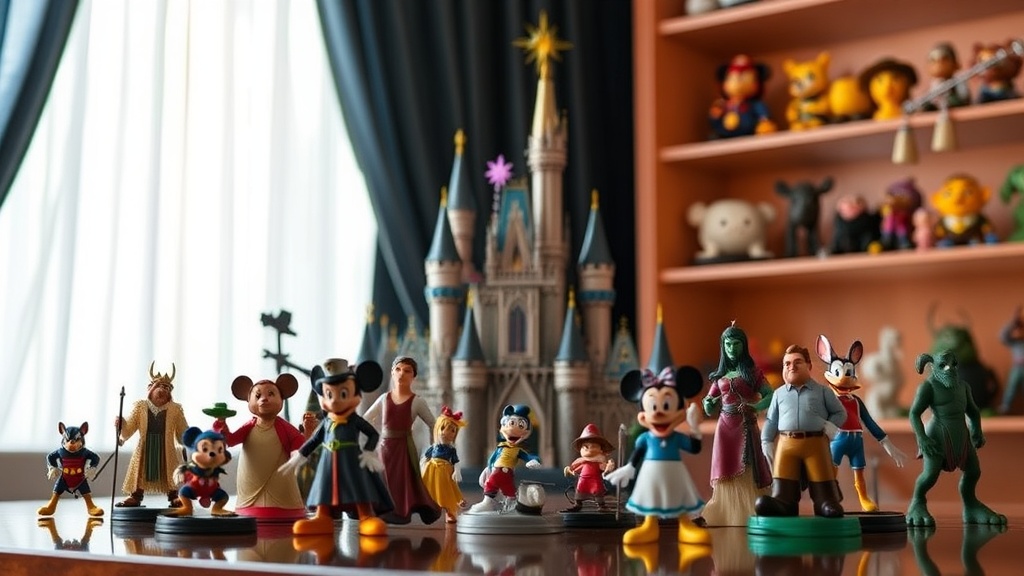
Organizing Your Disney Figure Collection by Theme and Scale

A collector reaches for a specific limited-edition Disney Parks designer doll, only to find it buried under a pile of mismatched Funko Pops and way too many 3-inch scale figures. The shelf looks cluttered, the scale is off, and the visual impact is lost. Organizing a collection isn't just about tidiness; it's about making sure your most prized pieces actually stand out. This guide looks at how to categorize your Disney figure collection by specific themes and physical scales to create a professional-grade display.
How Should I Categorize My Disney Figure Collection?
Categorizing your collection by theme is the most effective way to group items with similar aesthetic DNA. When you group by "Universe" or "Era," you create a cohesive visual narrative that makes sense to the eye. For example, you might have a dedicated section for Disney Villains, another for Star Wars, and a third for Classic Mickey. This prevents your shelf from looking like a random pile of plastic and turns it into a curated gallery.
Themed organization works best when you have a large volume of items. If you're a specialist, you might not even need themes—you might just be an expert in one specific line. But for the generalist, themes act as the foundation. You can group by:
- Character Archetypes: Heroes, Villains, Sidekicks, or Royalty.
- Media Source: Pixar, Marvel, Star Wars, or Disney Animation Classics.
- Art Style: Minimalist (like the Disney Q Posket line) versus highly detailed (like Hot Toys or Sideshow Collectibles).
- Era/Time Period: The Golden Age of animation versus modern 3D era characters.
Grouping by theme helps you spot gaps in your collection. If you notice your "Villains" section is looking thin compared to your "Heroes" section, you know exactly where to focus your next hunt. It also makes it much easier to find a specific piece when a friend comes over to visit. It's a small detail, but it makes a huge difference in how your collection is perceived.
The catch? Sometimes themes clash. A highly detailed 1/6 scale figure from Sideshow Collectibles might look awkward sitting right next to a small, stylized vinyl figure. This is where scale comes into play.
How Do I Organize Figures by Scale?
Organizing by scale ensures that your figures look proportional to one another and prevents smaller items from getting lost in the shadow of larger ones. Scale is the physical measurement of a figure relative to a real-world human. If you mix scales without a plan, your display will look chaotic and unbalanced.
When you organize by scale, you're prioritizing the physical footprint of the item. A 1/6 scale figure is massive compared to a 3-inch scale figure, and they simply shouldn't compete for the same eye level unless you have a specific design in mind. Using different shelf heights or tiered risers can help bridge these gaps.
| Scale Type | Common Examples | Display Strategy |
|---|---|---|
| Small Scale (1:12 or 3.75") | Disney Doorables, Classic Action Figures | Use tiered acrylic risers to create depth. |
| Medium Scale (1:10 or 1:8) | Disney Vinylmation, various Funko Pops | Group on flat shelves or in glass cubbies. |
| Large Scale (1:6 or 1:4) | Hot Toys, Sideshow Collectibles | Requires dedicated, heavy-duty shelving. |
| Micro Scale | Miniature figurines or LEGO DisneyGlass display cases with high magnification. |
If you're working with a limited amount of space, you'll want to be careful. A single 1/4 scale statue might take up the same space as fifty Disney Doorables. You can't just throw them all in a single bin and expect them to look good. You'll need to decide which scale gets the "prime real estate" on your eye-level shelves. Most collectors prefer to put their most expensive or detailed-scale items at eye level, while smaller, more numerous items go on lower or higher shelves.
Speaking of scale, if you're using high-end figures, you'll need to be mindful of the environment. Large-scale figures often have more surface area exposed to the air, which can affect their longevity. If you haven't already, you should look into securing your high-end Disney collectibles from UV damage to prevent fading. Sunlight is the enemy of both large and small scales alike.
What is the Best Way to Arrange a Display Case?
The best way to arrange a display case is to use a "layered" approach that combines both theme and scale. You want to create depth so the back of the case doesn't look like a flat wall of plastic. This is achieved by using risers, varying the height of the figures, and placing larger "anchor" pieces in the back.
Think of your display like a stage production. You have the background, the mid-ground, and the foreground. If you put your smallest figures in the very back, they'll be invisible. If you put your largest figures in the front, they'll block everything else. It's a delicate balance. A good rule of thumb is to place your heavy-hitters—the ones with the most detail—in the center or slightly to the back, and use smaller items to fill the gaps around them.
- Start with the Anchor: Pick your largest or most impressive piece and place it first. This sets the tone for the section.
- Layer with Risers: Use acrylic steps to lift smaller figures. This ensures that even a small Disney Doorable can be seen behind a larger figure.
- Group by Color or Theme: Once you have your heights set, group by color or character to create "visual pockets."
- Check the Sightlines: Step back from the case. If one figure is blocking another, adjust the angle or the height.
Don't forget about the lighting. A well-organized display can still look mediocre if it's poorly lit. If you're using LED strips, make sure they don't create harsh shadows that hide your smaller figures. If you have a lot of glass or acrylic, you might need to be careful about reflections. It's also worth noting that if you're using specialized lighting, you should be setting up a professional display case to ensure the light is distributed evenly.
One thing to watch out for is the weight. A large 1/4 scale figure is significantly heavier than a standard vinyl figure. If you're using a cheap, thin-walled shelving unit, the weight of a single large statue could cause the shelf to bow or even collapse. Always check the weight capacity of your furniture before you start loading up your collection. This is especially true if you're using a lot of tiered acrylic stands, which can add up quickly.
If you're a collector of older, more delicate pieces, you'll have different concerns. Vintage figures might be more susceptible to environmental changes. If you're displaying older items, you might want to review tips on maintaining plastic integrity for vintage Disney figures to ensure your organization methods don't accidentally lead to neglect.
At the end of the day, your collection is a reflection of your personal taste. There is no single "right" way to do this. You could choose to be a strict minimalist, or you could embrace the maximalist chaos of a full-shelf look. The goal of organizing by theme and scale is simply to make sure that when you look at your shelves, you see the characters you love, rather than just a cluttered mess of objects. Whether you're a casual fan or a hardcore collector, a little bit of planning goes a long way in preserving the joy of the hobby.